
Causes, typical triggers, and what really helps
Hot flashes are among the most well-known yet often underestimated symptoms of menopause.
They suddenly appear, are physically palpable, and can only be controlled to a limited extent. Many women describe them as unpleasant, disorienting, and difficult to plan for in everyday life.
Despite their frequency, the burden of hot flashes is often downplayed. Studies show that they can affect not only a physical symptom for many individuals but also sleep, concentration, emotional stability, and performance.
What are hot flashes?
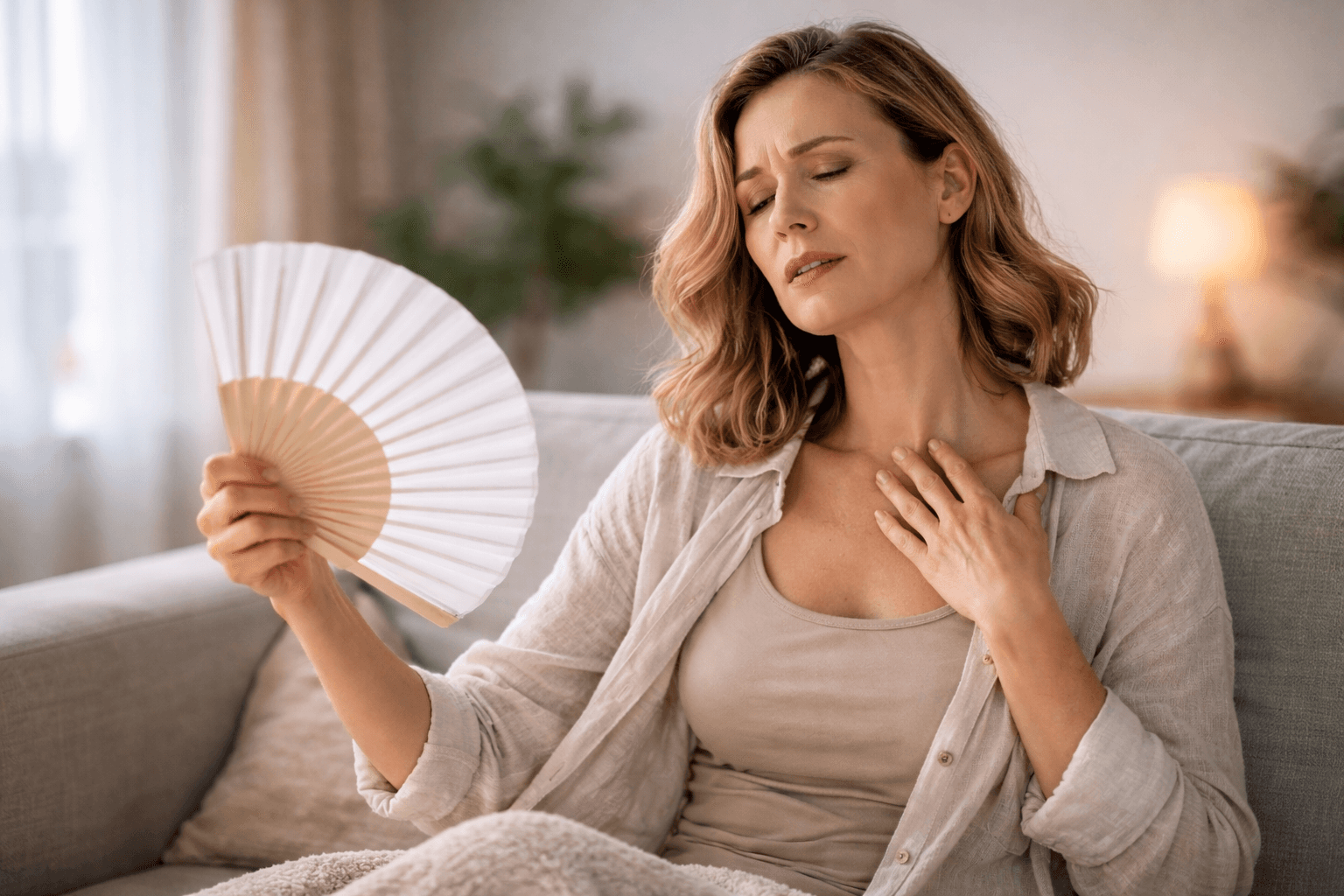
Hot flashes, medically referred to as vasomotor symptoms, manifest as a sudden feeling of warmth, usually in the upper body, face, or neck area. They are often accompanied by intense sweating, heart palpitations, or inner restlessness.
A single episode usually lasts a few minutes but can occur several times a day. In some affected individuals, hot flashes also occur at night and lead to so-called night sweats, which can significantly disrupt sleep.

How common are hot flashes during menopause?
International long-term studies show that about 60 to 80 percent of women experience hot flashes or night sweats during menopause. Around 20 to 30 percent describe these symptoms as severely distressing.
Research from large cohort studies also shows that hot flashes are by no means just a short-term phenomenon. The average duration can last several years, and for some women, even significantly longer.
Why do hot flashes occur?
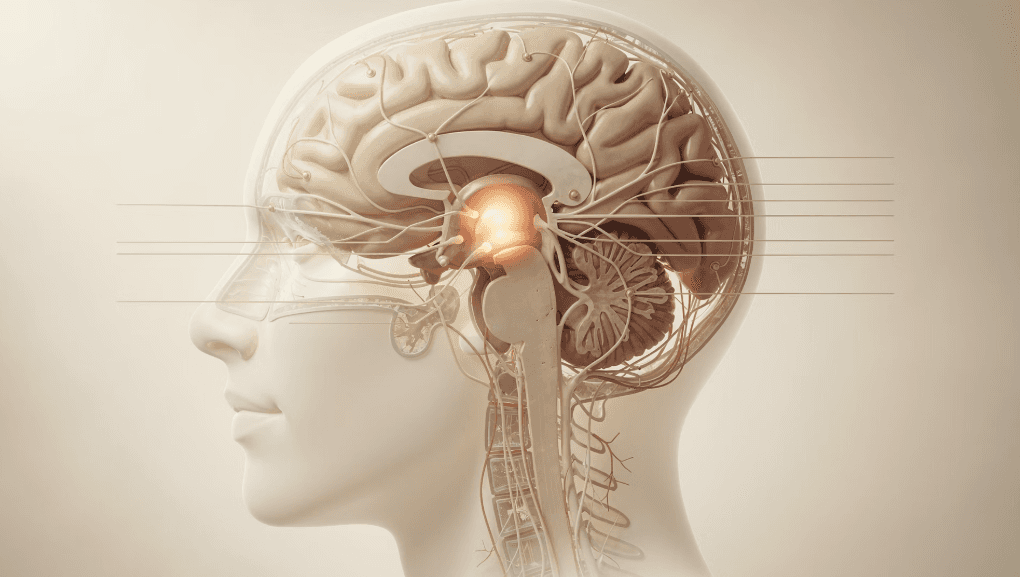
The onset of hot flashes is closely related to the hormonal changes during menopause. Decreasing estrogen levels affect temperature regulation in the brain, particularly in the hypothalamus.
In simple terms: The body's temperature control system reacts more sensitively during this phase. Even slight changes are interpreted as overheating, triggering a rapid counter-reaction. This manifests through vasodilation, sweating, and a sudden feeling of warmth.
Typical triggers in everyday life
Many women report that hot flashes do not occur randomly, but are favored by certain factors.
Commonly mentioned triggers are:
Psychological stress
or emotional stress
Sleep deprivation
or restless sleep
Alcohol
especially in the evening
Spicy food
or very hot food
Warm rooms
warm room temperatures
Time pressure
or social tension
Stress plays a special role in this. Studies show that psychological stress and hot flashes can mutually reinforce each other. The higher the stress level, the more frequently and intensely the symptoms are experienced.
Hot flashes and sleep
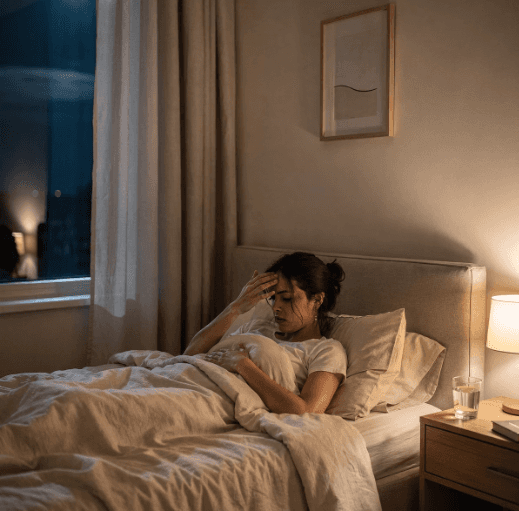
Nighttime hot flashes are one of the main causes of sleep disturbances during menopause. Studies show that 40 to 60 percent of women in this phase of life report significant sleep problems, often related to night sweats.
Disturbed sleep, in turn, affects concentration, emotional stability, and stress management. This creates a cycle in which lack of sleep enhances the perception of hot flashes and vice versa.
Hot flashes in the daily work routine
In a professional context, hot flashes can be particularly distressing. They often occur in situations where there are few opportunities to retreat, such as in meetings, presentations, or client discussions.
Many affected individuals report:
Uncertainty and loss of control
increased shame or avoidance behavior
additional mental strain
disruption of concentration in critical situations
As hot flashes can be visible from the outside, they are often experienced as particularly uncomfortable in the workplace. At the same time, many organizations lack knowledge about this phase of life.
Menopause in the workplace is not an individual issue.
What helps against hot flashes?
There is no universal solution that works equally well for everyone. However, studies show that certain approaches can reduce the intensity and frequency of hot flashes.
Stress management
mindful management of stress
Sleep regulation
and stable evening routines
Nutrition
Adjustment of diet and alcohol consumption
Movement
regular exercise
Load control
realistic load management in everyday life
Often, it is not a single measure that is decisive, but the interaction of several factors. A better understanding of one's own triggers can help to influence symptoms more specifically.