

Preventing burnout: 5 effective strategies for a healthy working life
Discover proven methods from our prevention workshops that help you avoid burnout and maintain long-term performance. For both employees and employers.
Emotional exhaustion
Constant fatigue, lethargy, and the feeling of being emotionally drained.
Practical content for real leadership situations
Cynicism towards work and colleagues, emotional distancing from professional tasks
Long-term integration into the management routine
Declining productivity, concentration problems, and feelings of ineffectiveness
Strategy 1:
Set boundaries and create work-life balance

Strategy 2:
Effective stress management in everyday work life
Breathing Techniques 4-7-8 Breathing Exercise: Inhale for 4 seconds, hold for 7 seconds, exhale for 8 seconds
Micro-Breaks
Take a 5-10 minute break every 90 minutes for mental recovery
Mindfulness Exercises
Integrate short meditation or conscious awareness of the surroundings
Stress management does not mean avoiding stress entirely, but
developing a healthy way to deal with it. These techniques can
be discreetly integrated into any work routine.
Strategy 3:
Set priorities and structure tasks
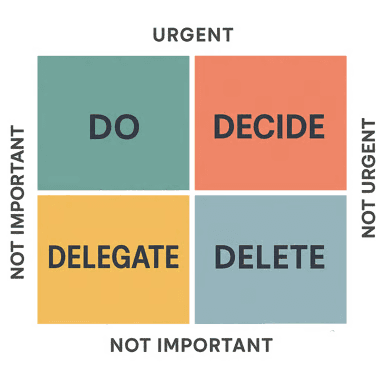
The Eisenhower Matrix helps to evaluate tasks based on their actual importance. Often, all tasks feel equally important, but strategic prioritization significantly reduces stress and increases productivity.
Strategy 4:
Strengthening social support and communication
Open communication
Address problems and burdens in a timely manner
Collegial support
Build networks and practice mutual aid.
Involve executives
Inform superiors about workload
Personal relationships
Use family and friends as emotional support
Strategy 5:
Healthy habits for physical and mental fitness
Physical Activity At least 30 minutes of movement daily, including climbing stairs or taking short walks. Exercise reduces stress hormones and releases endorphins.
Regular breaks for
Movement
Active commuting to work
Desk exercises at the workplace
Balanced Nutrition
Regular, nutrient-rich meals stabilize blood sugar and concentration. Avoid caffeine crashes through mindful eating.
Prepare healthy snacks
Drink enough water
Maintain mindful meal breaks
Sufficient Sleep
7-9 hours of quality sleep are essential for recovery. Develop a consistent sleep hygiene routine.
Set sleep times
Avoid screens before sleeping
Develop relaxation rituals

Implementation
Your personal burnout prevention plan
Self-Reflection and Analysis Evaluate your current situation honestly. What warning signs are you already noticing? Where are your biggest sources of stress?
Selecting and Adapting Strategies
Select 2-3 strategies that best fit your situation. Start with small, actionable steps.
Regular Evaluation
Review your progress monthly. Adjust strategies and celebrate small successes on the path to a healthier work life.
Burnout prevention is a continuous process, not a one-time event. Start today with small changes; your health and career will thank you.