

The 5-4-3-2-1 Mindfulness Exercise
This powerful mindfulness technique engages all your senses to quickly bring you back to the present moment during stress or tension. Perfect for short breaks at the office or in stressful situations.
This exercise brings you back to the here and now in stressful moments and immediately reduces overwhelm. By systematically activating all the senses, it effectively interrupts racing thoughts and contemplation.
Practice the 5-4-3-2-1 method regularly, preferably daily for 2-3 minutes. Over time, you will find that you can enter a state of calm and clarity more quickly. With regular use, you can also apply the technique in acute stress situations, during anxiety attacks, or before important conversations to regain your emotional balance.
Change of perspective
The change of perspective

Especially in challenging situations, a shift in perspective can help break through entrenched thought patterns and find creative solutions. This technique allows you to view problems from different angles and discover new courses of action.
Inventory
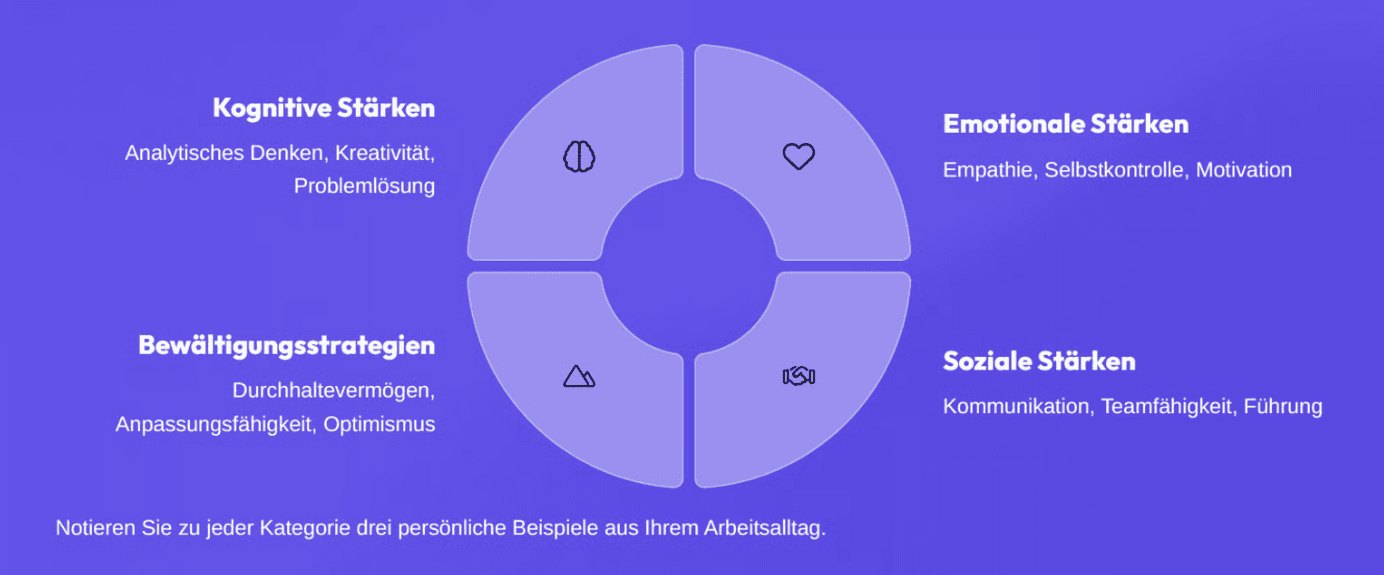
Create inventory of strengths
Rules
The 10-Minute Rule
In stressful work situations, a short, strategic break can work wonders. The 10-Minute Rule is a scientifically backed method that helps avoid overload and restore cognitive performance.
Set a Stop Signal
At the first signs of stress, immediately interrupt your current activity. Recognize the warning signals such as concentration difficulties, increased irritability, or physical discomfort. Consciously setting a "stop" prevents you from getting caught in a spiral of stress.
10 Minutes Break
Leave your workplace and take a purposeful walk. Changing your environment is crucial to creating real mental distance from the problem. Use this time for movement in fresh air, conscious breathing, or a short mindfulness exercise. Avoid digital devices and work-related thoughts during these 10 minutes.
Reflect and Restart
Return with a clear mind and re-prioritize. Ask yourself: "What is truly important right now?" and "Which next step will move me forward most effectively?" Write down the three most important tasks and start with the simplest one to create success experiences and build momentum.
This conscious interruption prevents overload and creates mental space for better decisions. Studies show that regular short breaks can increase productivity by up to 30%. The 10-Minute Rule is especially effective when you use it proactively, before stress becomes overwhelming. Integrate this technique as a fixed part of your workday ideally twice a day, even when you don’t feel stressed. This trains your ability for self-regulation and builds your resilience in the long term.
Daily rhythm
Energy management through daily rhythm
Tomorrow (6-10 AM)
Utilize maximum concentration for complex tasks
Morning (10 AM - 12 PM)
Plan meetings and communication optimally
Afternoon (2-4 PM)
Completing routine tasks and administration
Evening (4-6 PM)
Planning for the next day and reflection
Network
The Resilience Network

Building a professional support network is one of the most important steps in strengthening professional resilience. People with stable networks cope with crises more effectively and recover
faster from professional setbacks.
Identify Mentors
Look for experienced colleagues who can advise you during challenging times. Ideally, choose individuals who have already mastered similar challenges. Schedule regular conversations and prepare specific questions to get the most out of the mentoring relationship.
Form Peer Groups
Regularly exchange ideas with like-minded individuals about challenges. Organize monthly meetings or virtual discussion rounds where current issues can be discussed.
Different perspectives often open up surprising solutions and the feeling of not being alone with one's challenges.
Utilize Professional Support
Take advantage of coaching services or employee counseling from your company. Professional
coaches can develop tailored strategies to address specific professional challenges. Don't hesitate to use these resources; they are a sign of strength, not weakness.
Leverage Digital Networks
Expand your network through online platforms and professional forums. Professional networks like LinkedIn or Xing, as well as industry-specific communities, offer valuable exchange opportunities and access to knowledge and experiences far beyond your immediate environment.
Maintain Interdisciplinary Contacts
Consciously seek exchange with colleagues from other departments or industries. This diversity of perspectives promotes creative thinking and helps to view professional problems in a larger context. Often the best solutions arise at the intersections of different fields.
A strong professional network is the best protection against burnout and overwhelm. Regularly invest time in building and maintaining your contacts. It's not about quantity, but the quality of the relationships. Pay attention to reciprocity—offer support yourself and share your knowledge generously with others. This creates a network that supports you in times of crisis and is also a valuable resource in everyday life.
Measure success
Measure and celebrate success
Document your progress and reward yourself for achieving milestones. Small successes strengthen your confidence and resilience in the long run.